Tracing Clearance Timelines for Accumulator Credits and Table Game Cycles Among British Operators
Written by Logan Schröder · Sep 27, 2026

Tracing Clearance Timelines for Accumulator Credits and Table Game Cycles Among British Operators
Accumulator credits function as promotional rewards tied to multi-leg sports bets, and British operators track their clearance through sequential verification steps that confirm each leg meets minimum odds thresholds while table game cycles require repeated wagers on games such as blackjack or roulette before funds convert to withdrawable balances. These processes unfold across platforms where automated systems log every transaction, and operators release credits only after predefined conditions align with internal compliance frameworks.
Accumulator Credit Mechanisms in Practice
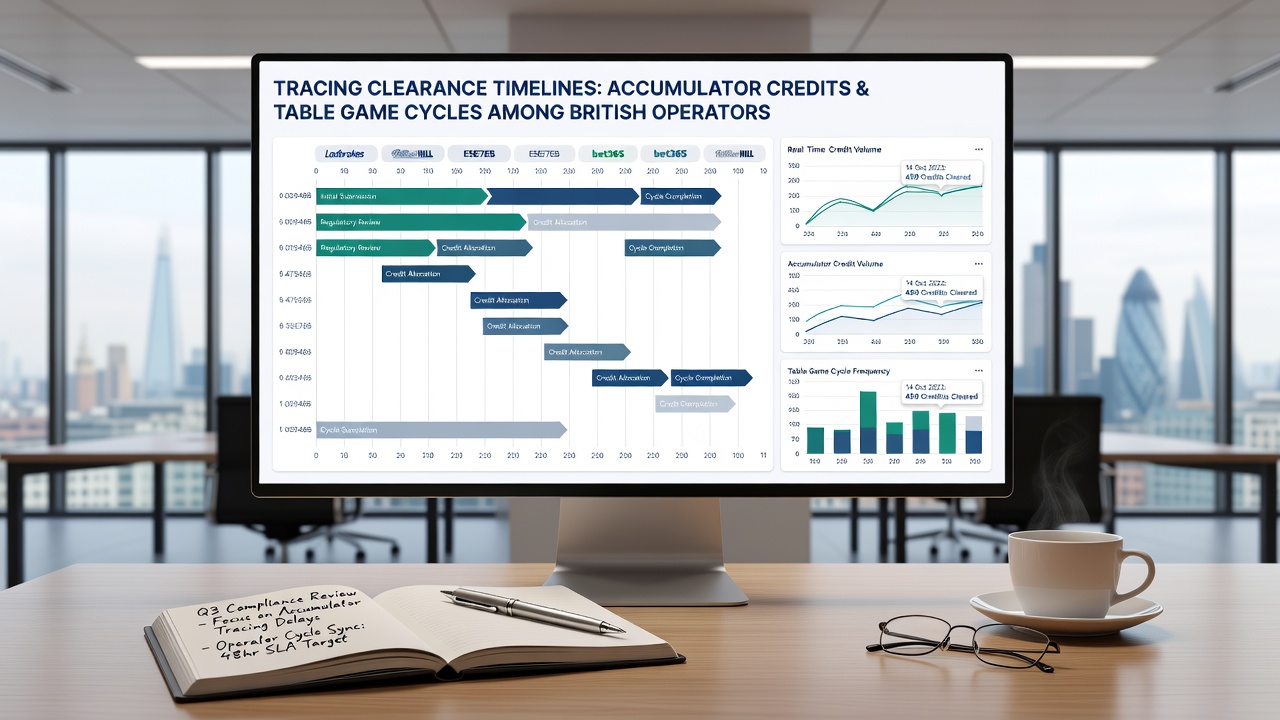
Operators allocate accumulator credits when punters complete bets featuring four or more selections, and clearance timelines stretch from 24 hours to several days depending on how quickly each leg settles through live events or scheduled matches. Data from industry reports shows that average clearance for these credits hovers around 48 hours during peak seasons, yet delays extend when events involve postponements or when verification flags unusual betting patterns. Those who monitor these flows note that systems cross-reference bet IDs against payout records before unlocking the credit for use in other markets or games.
Table Game Cycles and Their Processing Paths
Table game cycles demand that operators route bonus funds through a set number of spins or hands, and cycles typically mandate wagering amounts between 20x and 40x the initial credit value before release. Blackjack and roulette dominate these cycles because their house edges allow predictable turnover calculations, while operators segment cycles into daily caps that prevent rapid completion within a single session. Research indicates that completion rates climb during evening hours when player volume increases, and systems automatically deduct losses from the cycle total without resetting progress.
Factors Influencing Clearance Timelines
Clearance speed varies with operator size and technical infrastructure, and larger platforms integrate real-time APIs that shorten verification windows whereas smaller sites rely on batch processing that clusters approvals at midnight. External events such as major football tournaments accelerate accumulator clearances because higher match volumes reduce settlement lags, and table game cycles move faster when operators introduce time-limited multipliers that count double toward the required total. Observers note that September 2026 brought updated reporting standards across several European markets, which prompted British operators to refine their tracking dashboards for greater transparency in credit release schedules.
Payment method choices also shape timelines, and credits funded through e-wallets clear more rapidly than those tied to bank transfers because digital ledgers update instantaneously. Systems flag accumulators that include selections from lower-tier leagues for additional manual review, extending the window by up to three days in documented cases. Table game cycles incorporate contribution percentages where blackjack counts fully but side bets contribute only partially, forcing players to adjust strategies mid-cycle to meet targets without exceeding daily limits.
Comparative Data Across Operators
Studies conducted by the Responsible Gambling Council reveal that clearance timelines for accumulator credits average 36 hours on high-volume sites compared with 72 hours on mid-tier platforms, and table game cycles show similar spreads with completion rates ranging from four days to a full week. Canadian research from the Canadian Centre on Substance Use and Addiction highlights parallel patterns in bonus processing, where structured cycles reduce dispute volumes by 22 percent when operators publish exact contribution rates upfront. British operators apply these lessons through segmented player tiers that grant priority clearance to higher-volume accounts without altering the underlying rules for standard users.
Operational Adjustments and System Updates
Platform updates in recent years introduced automated reminders that notify users when accumulator legs approach settlement, and these alerts reduce support queries by surfacing pending clearances before they stall. Table game interfaces now display real-time cycle meters that track progress across multiple sessions, allowing seamless continuation on mobile or desktop without resetting accumulated wagers. Operators adjust cycle multipliers seasonally to align with event calendars, and September periods often feature lowered thresholds because player engagement dips after summer tournaments conclude.
Conclusion
Clearance timelines for accumulator credits and table game cycles among British operators depend on interconnected factors including settlement speed, contribution weighting, and technical batching methods, and data from multiple regions confirms that structured tracking systems produce more predictable outcomes across both categories. Ongoing refinements continue to align these processes with broader reporting expectations while maintaining consistent rules for all account types.