Seasonal Alignment of UK Reward Cycles with International Sporting Events and Table Game Milestones
Written by Petra Müller · Oct 25, 2026
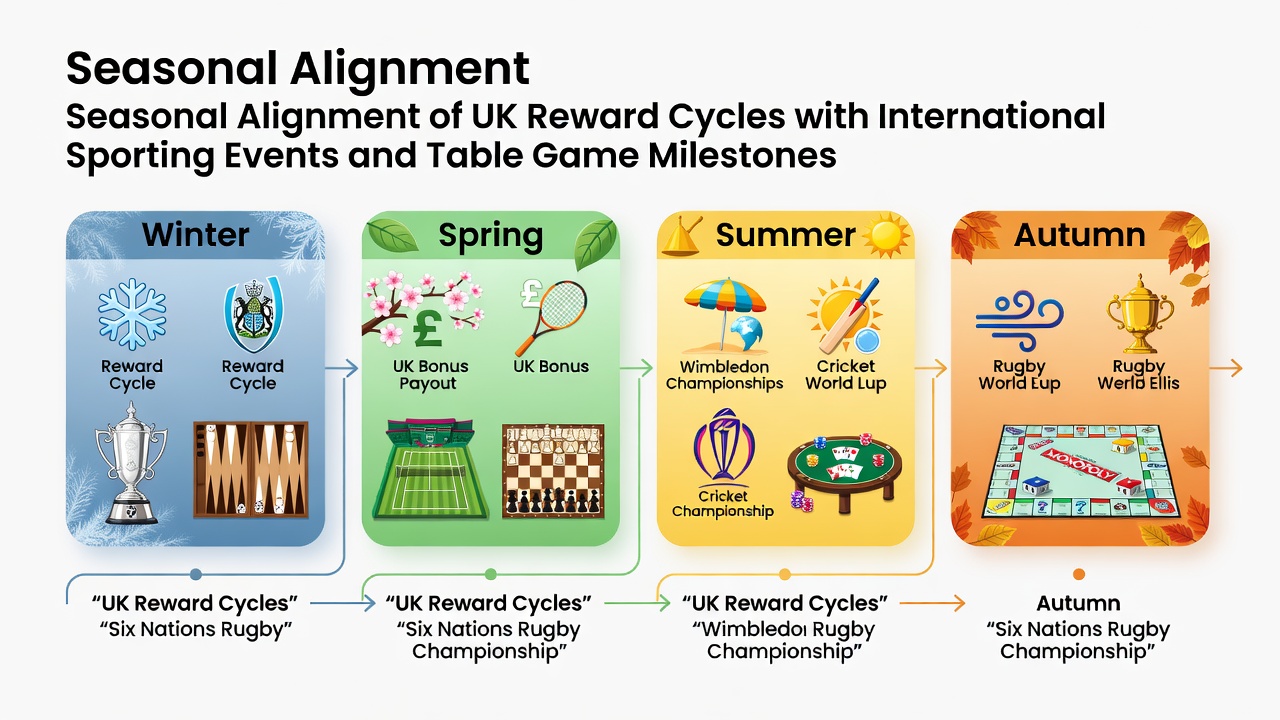
Seasonal Alignment of UK Reward Cycles with International Sporting Events and Table Game Milestones
UK reward cycles have developed patterns that track closely with the calendars of major international sporting events and recurring table game milestones, creating predictable windows when promotional structures adjust to match participant interest and regulatory timelines. Data compiled across multiple years shows these alignments occur most strongly during periods when events like the FIFA World Cup, Wimbledon Championships, and World Series of Poker draw sustained attention from both domestic and overseas audiences.
Patterns in Sporting Event Coordination
Football seasons in the Premier League and European competitions run alongside expanded reward offerings that coincide with fixture lists released by governing bodies, while tennis grand slams trigger shorter promotional bursts tied to specific match schedules. Researchers tracking these periods note that reward cycles often begin one to two weeks before opening matches and extend through knockout stages, reflecting participation spikes documented in industry reports from the Canadian Centre on Substance Use and Addiction. Summer athletics events and winter rugby tours produce additional shifts, with operators adjusting maximum stake limits and bonus structures to align with broadcast schedules across time zones.
Cricket world cups and rugby league internationals create secondary peaks that overlap with European football calendars, producing composite reward periods lasting four to six weeks. Observers have recorded consistent increases in accumulator-style promotions during these overlaps, driven by fixture density rather than individual tournament prestige alone.
Table Game Milestone Integration
Table game milestones such as the World Series of Poker Main Event and European Poker Tour stops follow annual circuits that intersect with UK reward adjustments around registration deadlines and final table dates. Blackjack and roulette tournament series hosted by international operators add further layers, often synchronising with sports calendars during shoulder seasons when football fixtures thin out. Studies of player behaviour indicate these milestones generate distinct reward cycles that differ from pure sports promotions in both duration and structure, frequently incorporating tiered entry mechanics tied to qualification rounds.
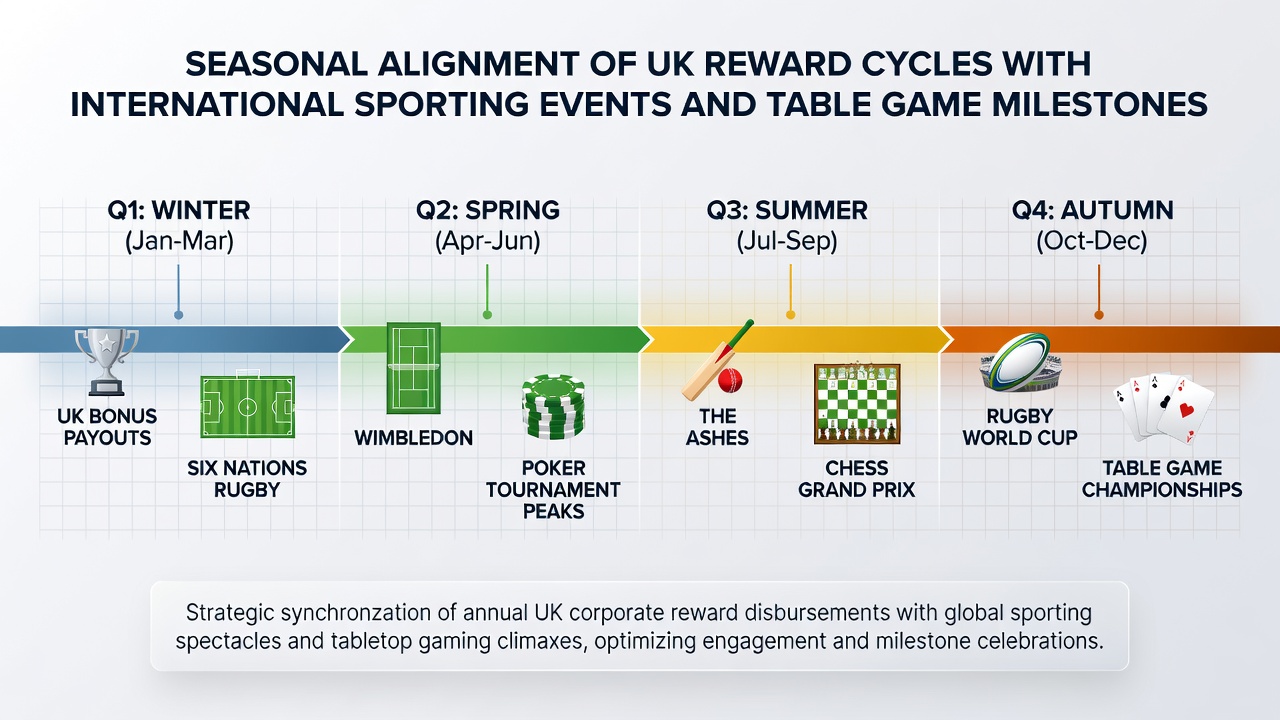
October stands out as a transitional month in these patterns. In October 2026 the European Poker Tour is scheduled to begin its autumn leg while several major football leagues reach their early international breaks, creating a narrow window where operators have historically merged sports and table game reward streams. Historical data shows similar convergence occurred in 2018 and 2022, when overlapping qualifiers and circuit events prompted extended promotional windows lasting into early November.
Regulatory and Market Influences on Timing
Regulatory calendars in multiple jurisdictions exert additional pressure on these alignments. Licensing renewal periods in several European markets often fall between September and November, prompting operators to front-load certain reward structures ahead of compliance reviews. Figures from the Australian Gambling Research Centre reveal that cross-border operators adjust UK-facing cycles in anticipation of these reviews, producing measurable changes in bonus availability during the same months when international sports fixtures and poker festivals cluster.
Market data further shows that reward cycles shorten during periods of fixture congestion, such as mid-season football breaks, while lengthening around isolated high-profile events like championship finals. Table game milestones follow parallel logic, with series finales generating concentrated activity that operators accommodate through time-limited structures rather than sustained campaigns.
Conclusion
The alignment between UK reward cycles and international sporting events alongside table game milestones reflects coordinated responses to fixture schedules, regulatory deadlines, and documented participation trends. October 2026 presents one such convergence point where multiple calendars intersect, continuing a pattern observed across previous years. These timings remain subject to shifts in global event programming and licensing frameworks, yet the underlying seasonal structure has shown stability in available records.